
Long dry times are one of the most common dryer complaints. The machine may still get hot, which can make the problem confusing. Drying requires both heat and strong airflow; either one can be weak while the dryer still appears to run normally.
If clothes need two or three cycles, start with airflow. A restricted vent, lint buildup, a weak blower or a crushed duct can trap hot moist air inside the dryer. Weak or intermittent heat, moisture-sensor problems and an overloaded or poorly spun load can also extend drying time.
Restricted airflow
The dryer has to move a large volume of air through the drum and out of the home. A partially blocked system can still move some air, so the dryer runs and feels warm, but moisture leaves the clothes too slowly.
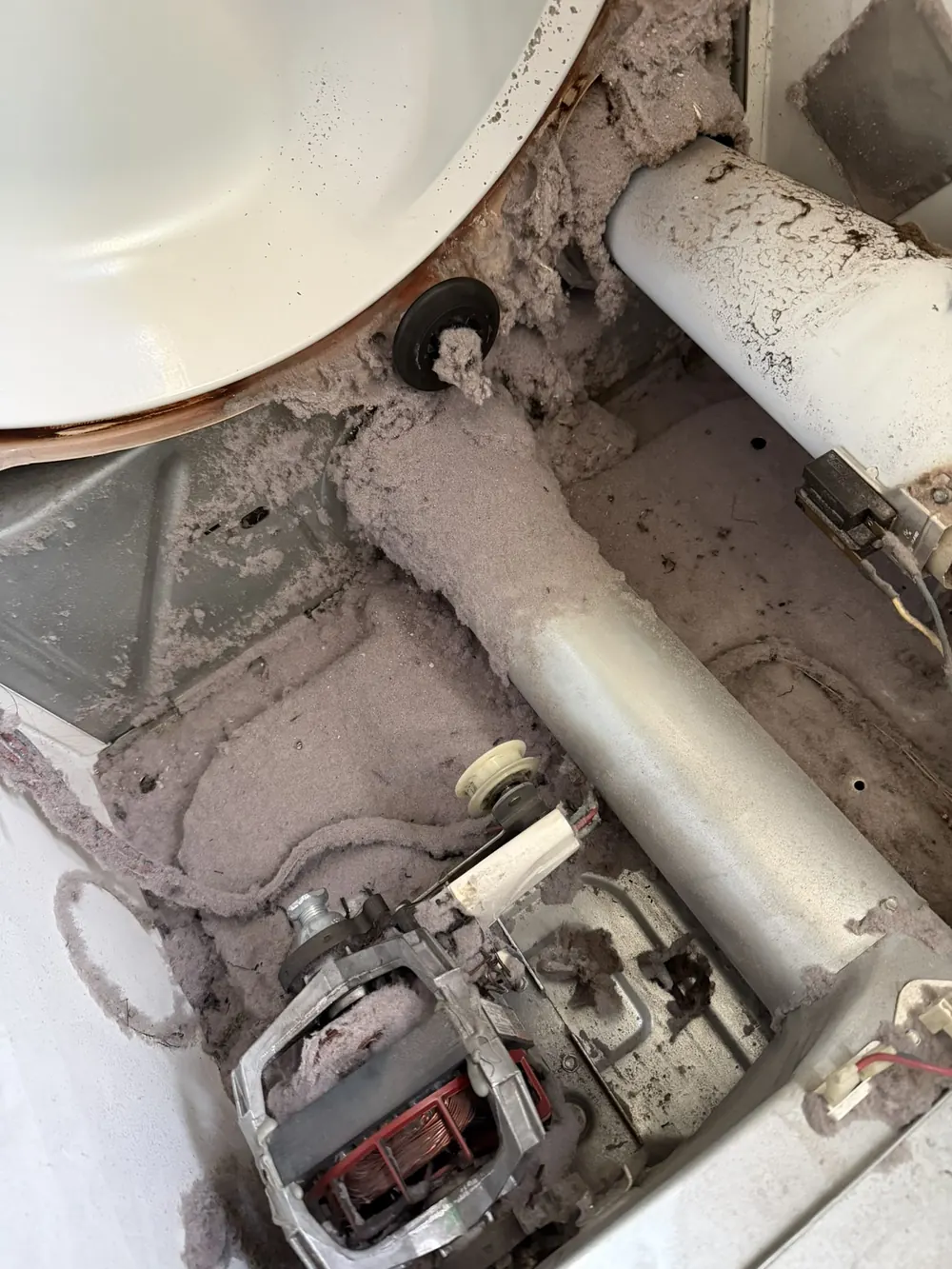
Common airflow restrictions
- Lint packed into the lint housing or internal duct.
- A crushed or kinked transition duct behind the dryer.
- A long vent run with multiple bends.
- A blocked exterior hood or flap.
- A blower wheel that is loose, damaged or obstructed.
Heat can be present but too weak
An electric element can cycle abnormally, a gas burner can ignite inconsistently, or a temperature-control problem can reduce average heat. The dryer may feel warm when you open the door but still fail to maintain the heat needed through the cycle.
The washer can affect dryer time
If the washer does not spin water out of the load effectively, the dryer begins with much wetter clothes. A sudden change in drying time after a washer problem is worth noting.
Moisture-sensor and automatic-cycle problems
Automatic cycles depend on sensor input and airflow. Residue on sensor bars, wiring issues or control problems can cause poor cycle decisions. A timed cycle comparison can sometimes help separate a sensor-cycle complaint from a true heating or airflow problem.
Safe checks before service
- Clean the lint screen before every load.
- Check the transition duct for crushing or sharp bends.
- Confirm the exterior vent opens strongly while the dryer runs.
- Try a normal-size load rather than packing the drum full.
- Note whether the clothes are hot but damp, or cool and damp.
Why long dry times should not be ignored
A dryer that runs much longer than normal uses more energy and may operate at elevated temperature for extended periods. If the cause is restricted airflow or heavy lint buildup, the issue is also a maintenance and safety concern.