
A burning smell is not a symptom to “watch for a few more cycles.” Some causes are minor, but lint, a slipping belt, a failing motor or an electrical connection can all generate dangerous heat.
Unplug an electric dryer if it is safe to do so. If you smell unburned gas, follow gas-safety guidance and do not create sparks or flames.
Heavy lint buildup
Lint does not stay only on the screen. Over time it can accumulate inside the cabinet, around the motor, blower housing and ductwork. Restricted airflow makes the dryer work harder and increases operating temperature.
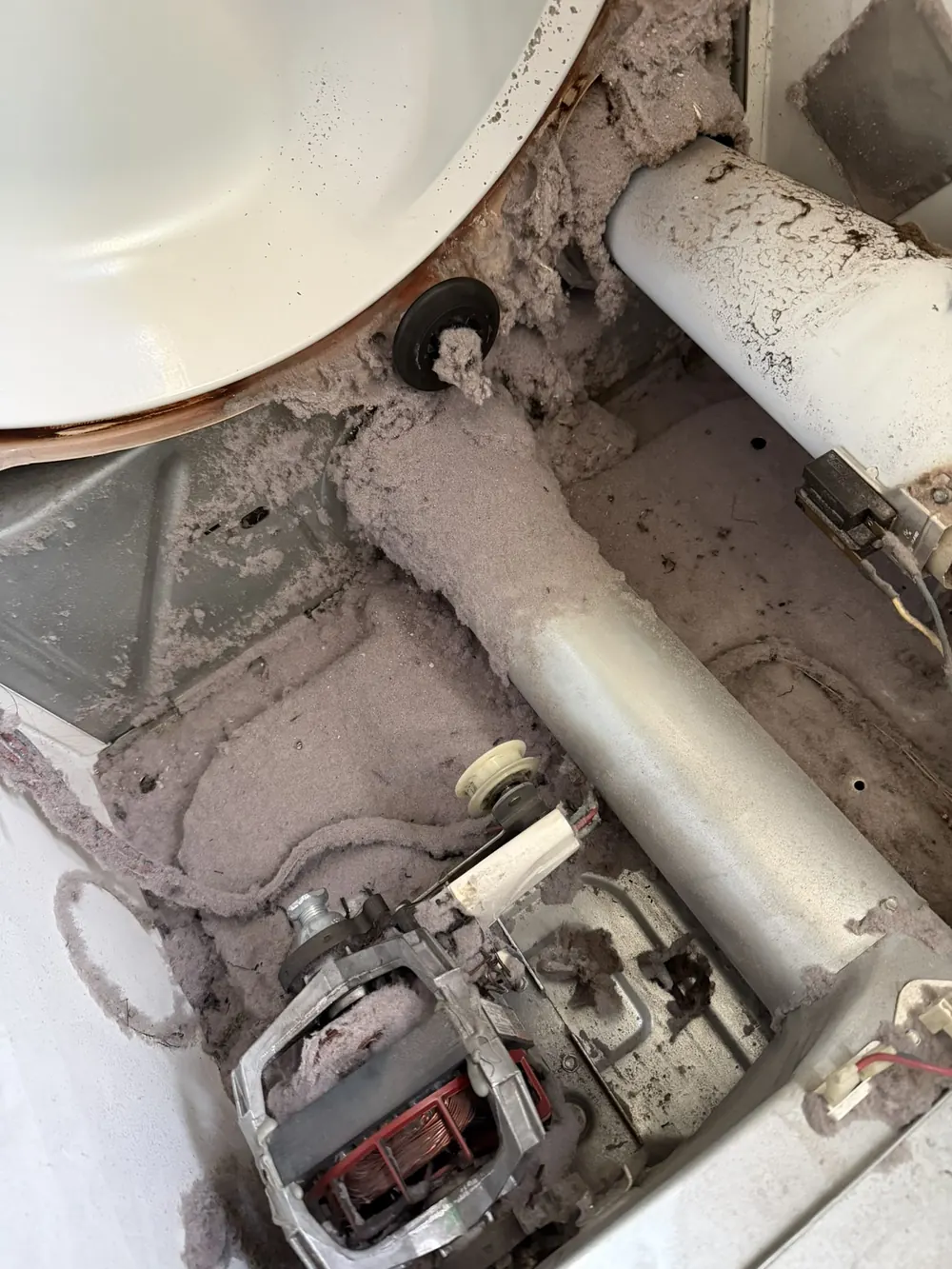
Restricted exhaust vent
A clogged, crushed or excessively restrictive vent traps heat and moisture. Typical clues include very long dry times, an unusually hot laundry room, a dryer that cycles heat oddly, or a weak exterior exhaust flow.
Belt, idler and drum-support friction
A slipping belt or failing moving part can create a hot rubber or friction smell. A worn roller or idler can also increase drag and load the motor.
Motor or electrical heat
A motor winding, overheated terminal, loose connection, damaged wire or control component can produce a sharp electrical smell. These failures should be inspected before the dryer is used again.
Periodic maintenance
Cleaning the lint screen is an every-load task, but the internal cabinet and exhaust path may also need periodic attention. The interval depends on dryer design, usage and vent configuration. Older or heavily used dryers are worth inspecting when dry times increase, lint is escaping the normal path, or the machine has never been opened for maintenance.
What a maintenance visit should include
- Inspecting the internal lint path and blower area.
- Checking the belt, rollers, idler and drum support while access is open.
- Looking for overheated wiring or terminals.
- Checking the transition duct and accessible vent path.
- Verifying normal airflow and operation after reassembly.
Cleaning alone does not repair a failed motor, heater or control, but a clean airflow path makes the dryer easier to diagnose and reduces one major source of heat stress.