
A dryer that tumbles normally but produces little or no heat does not automatically need a heating element. The correct diagnosis depends on whether the dryer is electric or gas, whether airflow is normal, and whether the heat source is being commanded on.
Electric dryers commonly lose heat because of a failed heating element, thermal fuse, thermostat, high-limit device, wiring problem or control issue. Gas dryers add an ignition sequence: igniter, flame sensor and gas-valve coils. Restricted airflow can contribute to overheating and repeat thermal failures on either type.
First determine whether the dryer is gas or electric
An electric dryer uses a resistance heating element. A gas dryer uses an igniter and burner assembly. The symptom “runs but does not heat” is the same, but the diagnostic path is not.
Common causes on an electric dryer
Heating element
The element can open electrically or short against its housing. A visual inspection alone is not always enough; the circuit should be tested.
Thermal fuse and temperature controls
Thermal fuses and high-limit devices are safety components. If one opens, the dryer may run without heat or may stop operating, depending on the design. A failed safety device should never be bypassed. The reason it failed also matters, especially if airflow is restricted.
Power supply
Many 240-volt electric dryers can still tumble when one side of the power supply is lost. That is why “the drum turns, so power is fine” is not a complete test.
Wiring, relays and controls
Burned terminals, damaged wiring, heater relays, timers or electronic boards can interrupt the heating circuit even when the element itself is good.
Common causes on a gas dryer
The burner must complete a sequence: the dryer calls for heat, the igniter heats, the flame sensor responds, the gas valves open and the burner lights. A failure anywhere in that sequence can produce no heat or intermittent heat.
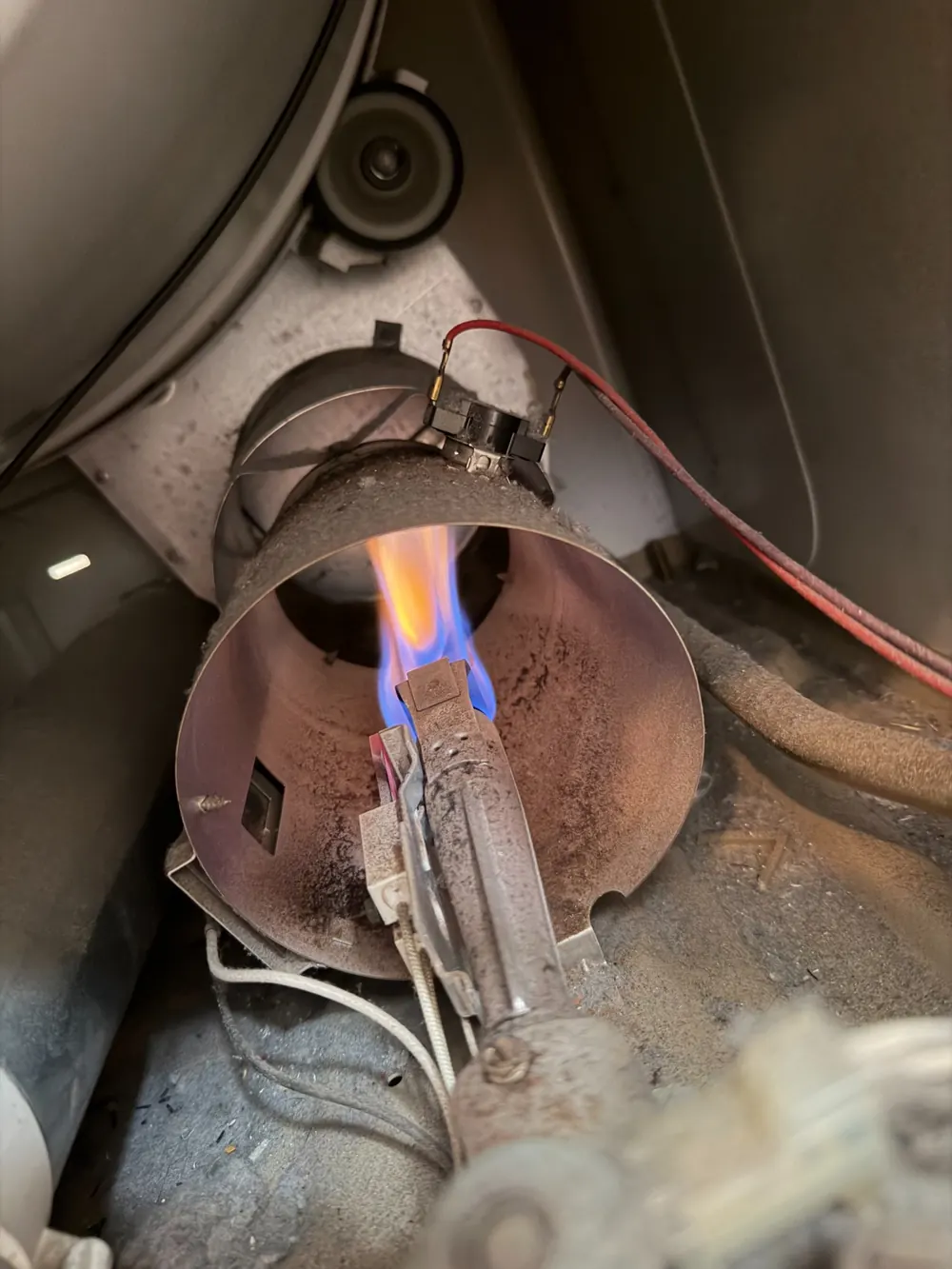
Gas-valve coils
Weak or failing coils can work briefly when cold and then stop opening the valve after the dryer warms up. That can create a dryer that heats at first but later runs cold.
Igniter and flame sensor
A cracked or weak igniter may not complete the ignition sequence. The flame sensor also has to respond correctly before the valve opens.
Airflow matters even when the heater is the failed part
A clogged lint path, restricted duct or weak blower can raise operating temperature and stress thermal components. If a thermal fuse or high-limit device failed, the airflow path should be checked rather than replacing the safety device and ignoring the cause.
Safe checks you can make
- Clean the lint screen.
- Check whether the exterior vent flap opens while the dryer runs.
- For an electric dryer, check the household breaker for a partial trip.
- For a gas dryer, confirm the gas shutoff has not been intentionally closed.
- Note whether heat appears briefly and then disappears.
How we diagnose a no-heat dryer
We confirm airflow, verify the heat source, test the relevant safety devices and inspect the wiring and control path. On gas units we observe the ignition sequence; on electric units we verify the heater circuit and power supply. That avoids replacing the most obvious part when the actual failure is somewhere else.
Stop using the dryer if you smell gas, see smoke, notice scorching, or the machine is overheating. Do not bypass a thermal fuse or other safety control.