A Sub-Zero that is running warm needs more than a quick parts guess. “Not cooling” can come from airflow, door sealing, fans, temperature sensors, defrost, the compressor start system, refrigerant loss or a failed compressor. The useful clue is how the temperature behaves and which part of the system is actually failing.
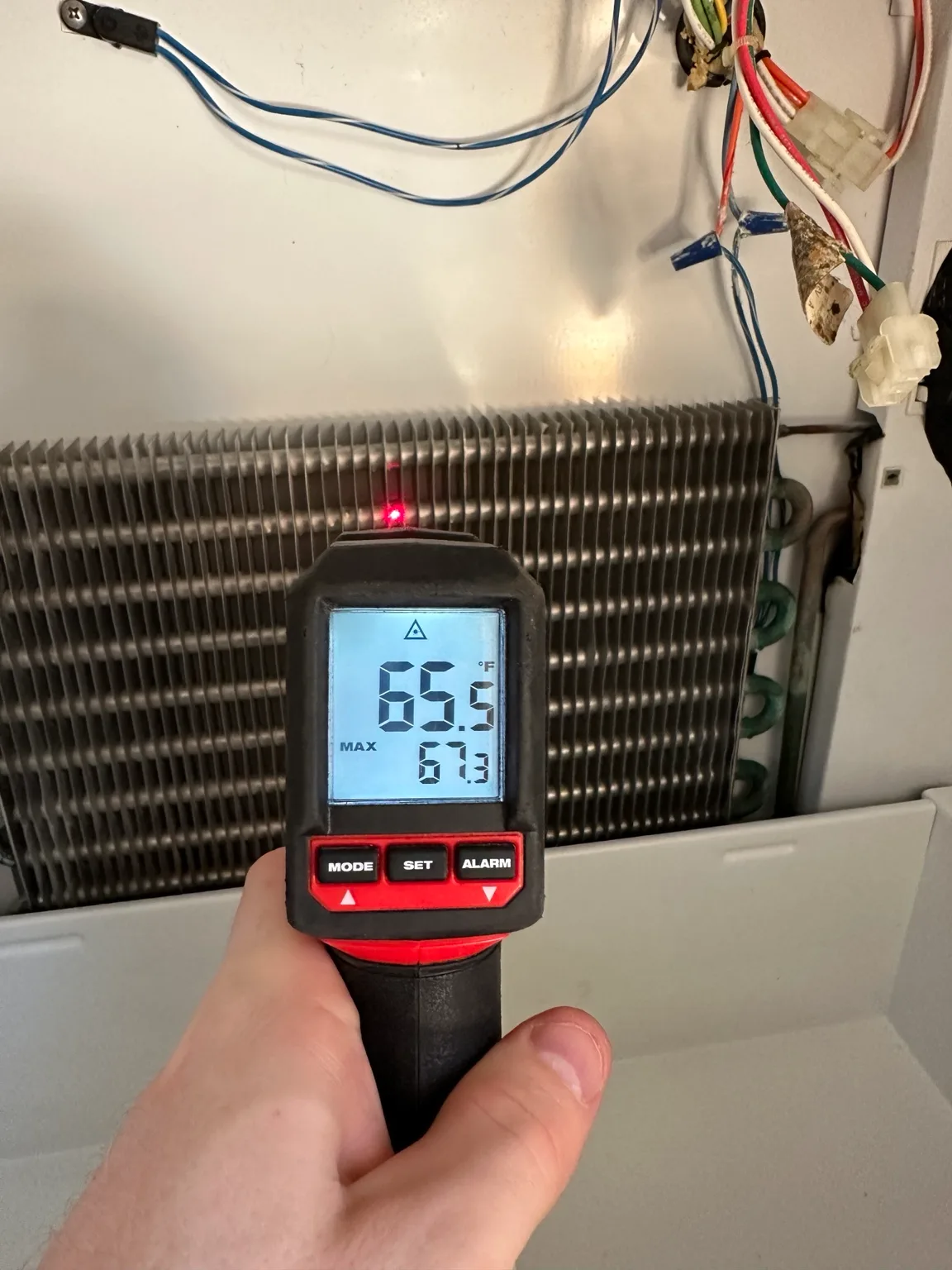
Before deciding what failed, confirm the refrigerator and freezer temperatures and note whether one compartment is warm, both are warm, or the unit is getting progressively worse. That separates a control or airflow complaint from a refrigeration-system problem much faster.
Common reasons a Sub-Zero runs warm
Condenser and airflow
A dirty condenser or poor airflow through the machine compartment makes it harder for the refrigeration system to reject heat. That can increase compressor run time and reduce cooling performance. Condenser maintenance is important, but cleaning alone does not fix a failed fan, sensor, compressor or refrigerant leak.
Door sealing and warm-air infiltration
A door that does not close fully, a damaged gasket or something holding a drawer open can bring warm humid air into the cabinet. That can raise temperature, create frost and make the refrigeration system run longer than normal.
Evaporator fan or airflow problem
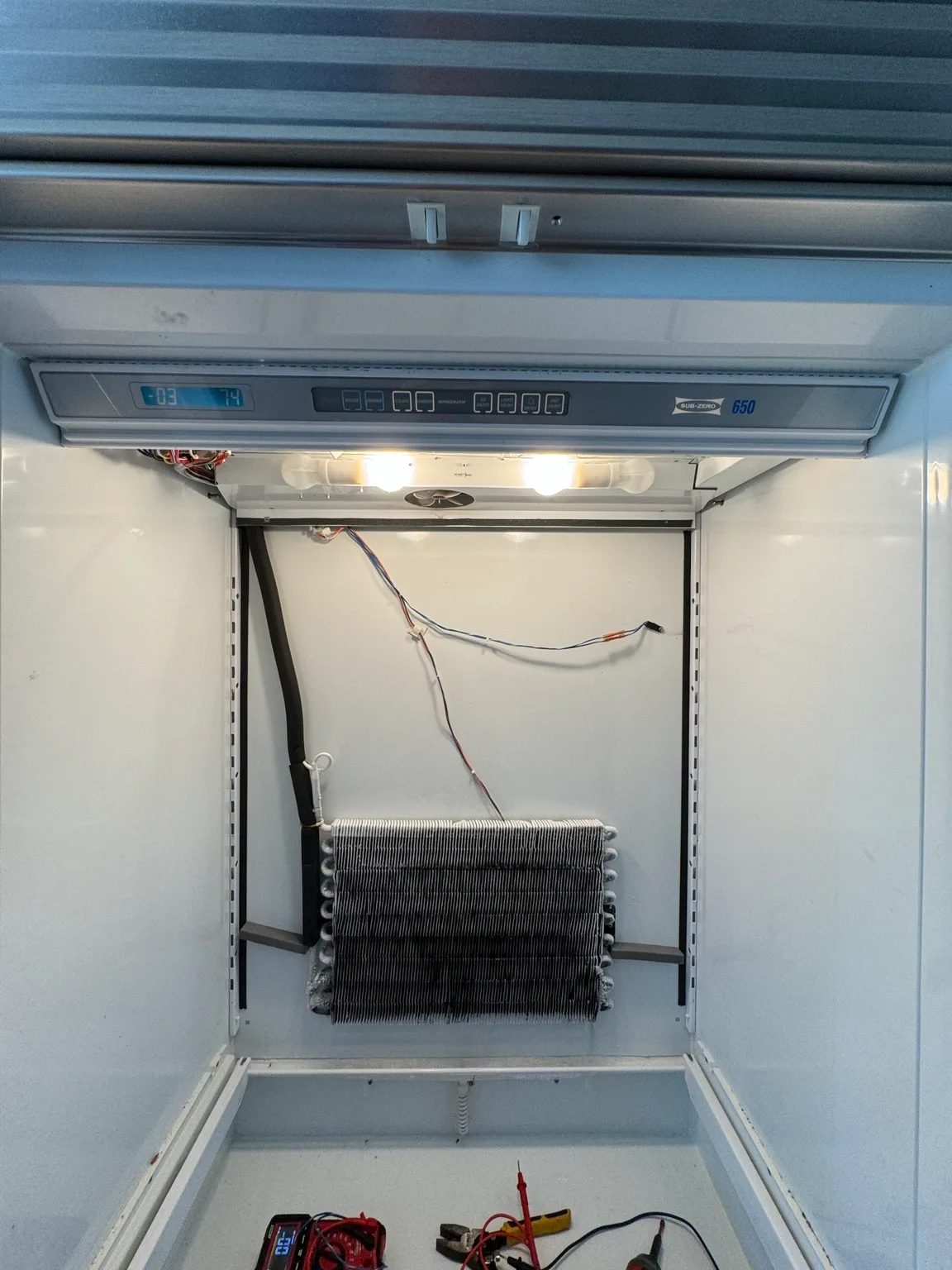
The evaporator can be cold while food temperatures remain high if the fan cannot move air through the compartment. Frost or ice around the evaporator can also block airflow.
Temperature sensor or control problem
Sub-Zero systems use temperature feedback to decide when to run cooling components. A bad sensor, connection or control problem can make cabinet temperature disagree with what the system believes is happening.
Compressor start system
A compressor that clicks, tries to start or stays silent may have a relay/overload or electrical problem. The start system should be tested before an expensive compressor is condemned.
Refrigerant leak or compressor failure
If the sealed system cannot build and move refrigerant correctly, temperatures rise even though fans and controls may appear normal. Leak diagnosis, compressor testing and refrigeration-system work require model-specific tools and measurements.
Safe checks before service
- Confirm the doors and drawers close completely.
- Check the displayed set temperatures and note the actual cabinet temperature if you have a thermometer.
- Look for a Service or Vacuum Condenser message.
- Clean the condenser if it has not been maintained recently and the model allows owner access.
- Listen for fans and note whether the compressor is running, clicking or silent.
- Note where frost is building and whether only one compartment is affected.
What we test on a no-cool call
We compare actual and displayed temperature, inspect airflow and frost pattern, check fans, sensor inputs, controls and the compressor start circuit, then move into sealed-system testing only when the evidence points there. That keeps a simple fan, sensor or relay repair from being misdiagnosed as a compressor job.
If the refrigerator has been above safe food-storage temperature for an extended period, follow food-safety guidance for perishable food rather than relying only on how the food looks or smells.
For service, see our Sub-Zero repair page or call Local Appliance Repair for the next available appointment.